Home › Industrial Floors and Specialty Slabs
Handle heavy loads with industrial concrete floors and specialty slabs in Fort Smith, AR. We pour high tolerance warehouse floors, equipment foundations, and specialty slabs designed for forklifts, racking, and manufacturing operations.
Superior Concrete Fort Smith provides professional industrial concrete floor throughout Fort Smith, AR, Arkansas and the surrounding area. Our licensed, insured crew delivers safe, clean, on-time work with a free estimate before anything begins. Call 479 346 0698 or request your free quote.
Industrial Concrete Floors Built for Real Fort Smith Workloads
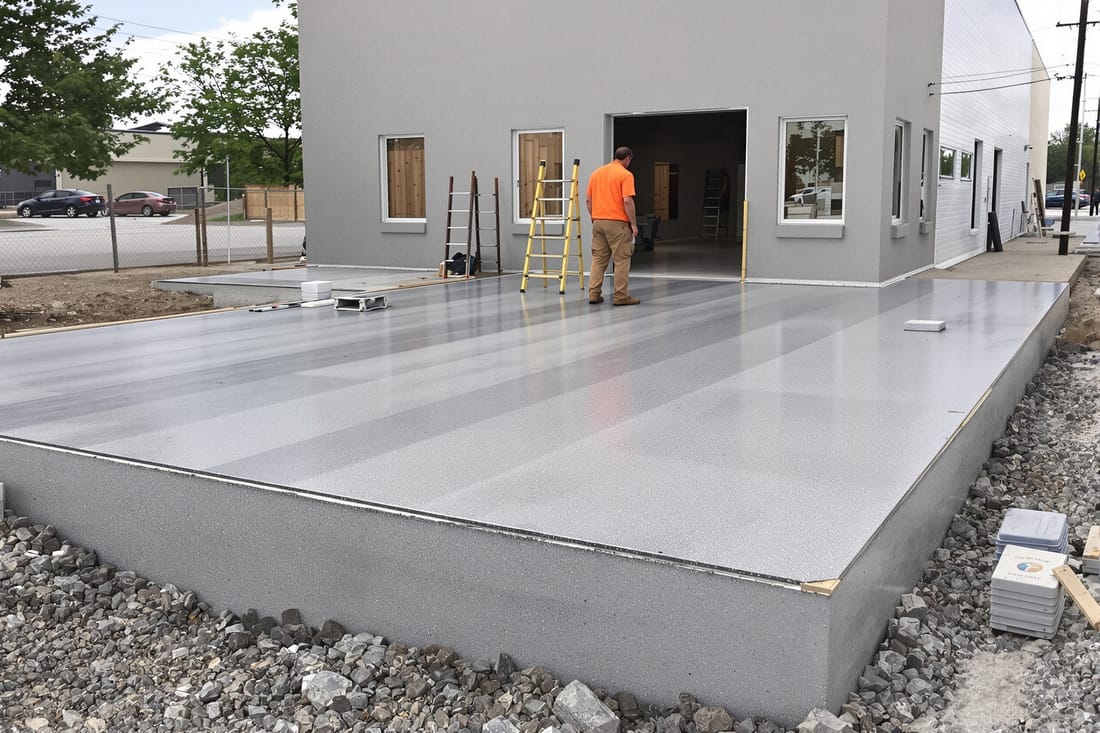
If your facility in Fort Smith needs an industrial concrete floor that can handle forklifts, production lines, or heavy storage racks, you want more than a basic slab. At Superior Concrete Fort Smith, we design and pour industrial floors and specialty slabs that are matched to your actual loads, traffic patterns, and future expansion plans.
We start with a site visit. We walk your plant, warehouse, or yard, look at existing cracks or settlement, and ask detailed questions about your operations. Do you run fully loaded forklifts, pallet jacks, or steel-wheeled carts. Will you be installing racking, CNC machines, or paint booths. Do you expect chemical spills, hot washdowns, or thermal swings. Your answers shape the mix design, slab thickness, joint layout, and reinforcement choices.
In the Fort Smith area we also have to account for our hot summers, rapid temperature swings in spring and fall, and occasional deep cold snaps. All of that affects how the floor is reinforced, how joints are spaced, and how we stage the pour. Planning for our local climate from the start helps your industrial concrete floor stay flatter and resist random cracking for years.
How We Design Industrial Floors and Specialty Slabs
Industrial floors are engineered systems, not just concrete on dirt. Superior Concrete Fort Smith works with engineering specs or, when needed, can help you get a slab design that fits your building and budget.
Subgrade and base prep comes first. We examine your soil conditions, check for soft spots, and proof-roll if access allows. In many Fort Smith sites along the river or near low-lying areas, we see moisture-prone or silty soils. Those areas may need undercutting and compacted aggregate base to prevent pumping and slab settlement. We typically use a graded crushed stone or flexbase, compacted in lifts and checked with a compaction meter.
Next is slab thickness and reinforcement. Light industrial shops might use a 5 to 6 inch slab, while distribution centers, heavy manufacturing, or high-bay racking can require 7 to 10 inches or more. Reinforcement can be rebar, welded wire mesh, or steel fibers blended into the mix. For heavily loaded slabs or those with point loads from racks and equipment pads, we often combine steel fibers with traditional reinforcement to control cracking and curl.
Joint layout is another critical step. We map out saw-cut control joints and construction joints based on bay sizes, load paths, and where traffic will actually run. In high-traffic forklift aisles, we may use armored joint systems or keyed construction joints that stay level longer. For specialty slabs like machine foundations or isolated pads, we detail extra thickened sections, anchor bolt placement, and vibration control measures so your equipment runs true and stays aligned.
Our Installation Process, Start to Finish
Once the engineering and layout are set, we move into installation. Superior Concrete Fort Smith schedules pours around your operations, which is crucial if you are trying to keep a plant or warehouse running. For new construction we coordinate with your GC, electricians, and plumbers so conduits and drains are in exactly the right locations before concrete arrives.
Forming and vapor control come first. We set forms to tight elevations using laser levels so the slab stays within flatness tolerances. On interior slabs over conditioned spaces or where moisture is a concern, we typically install a vapor barrier under the concrete and tape all seams, which can be important for facilities planning to install epoxy, tile, or other moisture-sensitive finishes later.
We then place reinforcement and check clearances. Rebar chairs, fiber dosage rates, dowel baskets at joints, and embedded plates are all verified before any concrete truck backs up. For many industrial concrete floors we order a higher strength mix, often 4000 psi or more, with admixtures that improve workability in hot Arkansas weather and reduce shrinkage.
Concrete placement is done with an eye on both speed and quality. We use laser screeds or advanced screed boards for large open areas to hit target flatness, especially for facilities that will run high-mast forklifts. Finishing can be basic broom for utility areas, hard-troweled for smooth interiors, or prepped for an epoxy or urethane coating. For some specialty slabs we may work with dry shake hardeners or surface densifiers that improve abrasion resistance for high-traffic zones.
Early-entry saw cutting is usually done within hours after finishing, timed to our climate conditions so we create clean joints before the slab randomly cracks. We then cure the floor with either curing compounds or wet curing methods, depending on the finish and any coating system you have planned.
What Affects Cost and Timeline for Industrial Concrete Floors
No two industrial floors in Fort Smith cost the same, because the loads and conditions are different. When Superior Concrete Fort Smith prices a project, we walk you through the specific items that move the needle so you can make informed decisions instead of guessing.
Key cost drivers include slab thickness, reinforcement type, and mix design. A 6 inch slab with fiber reinforcement costs less than a 10 inch slab with heavy rebar and dowel baskets throughout. High-performance mixes for cold storage, chemical resistance, or fast-track projects can be more expensive per yard but may save you downtime or future repair costs.
Site conditions matter as well. If we find poor soils, standing water, or old fill that was never compacted, we may recommend removing and replacing it with compacted aggregate. That adds some upfront cost but greatly reduces the risk of future slab settlement and joint faulting. Limited access, tight interior work, or projects that need to be done overnight or on weekends can also impact labor costs.
Timeline depends on project size, weather, and how quickly we can sequence the work around other trades. In hot Arkansas summers we often pour early in the morning or overnight to avoid rapid surface drying and plastic shrinkage cracking. After placement, most industrial slabs need several days before light foot traffic, a week or more before forklifts, and longer before full design loads, especially in cooler weather. If you need a faster return to service, we can discuss accelerators or high-early-strength mixes.
During estimating we encourage you to share expansion plans, potential new equipment, and future racking layouts. Designing for tomorrow’s loads now can avoid cutting and thickening sections later, which is much more disruptive and expensive.
Common Industrial Floor Problems and How We Prevent Them
Many of the repair calls we get in Fort Smith are for floors that were poured without industrial use in mind. Typical issues include uncontrolled cracking, spalling at joints, slippery or dusty surfaces, and slabs that curl at the edges so forklifts bump over joints. At Superior Concrete Fort Smith our goal is to prevent these headaches by addressing the causes before we ever pour.
Cracking is managed, not eliminated. By using the right joint spacing, reinforcement strategy, and curing method, we guide cracks into planned control joints. In our climate, where temperature and humidity can swing quickly, we are careful with water content in the mix and finishing timing so the surface does not dry too fast.
Joint damage is another big one, especially in busy distribution and manufacturing spaces. To combat this, we can use doweled and armored joints at main traffic routes, keep load transfer consistent across joints, and avoid wide random gaps. We also pay close attention to subbase compaction along joint lines so nothing pumps or settles under repeated forklift loads.
For chemical exposure or frequent washdowns, we select mix designs and surface treatments that resist the specific products you use, from oils and fuels to caustic cleaners. For clients planning epoxy or polished concrete, we coordinate finish level, curing methods, and joint details so those systems bond well and wear evenly.
If you already have an industrial concrete floor with problems, we can evaluate it and suggest repair or retrofit options. These can include joint stabilization, overlays, partial-depth replacement, densifiers, or adding a specialty topping slab in key production areas. We are happy to walk the floor with you, talk about what is not working, and lay out practical fixes that fit your schedule and budget.