Home › Commercial Concrete Slabs and Flatwork
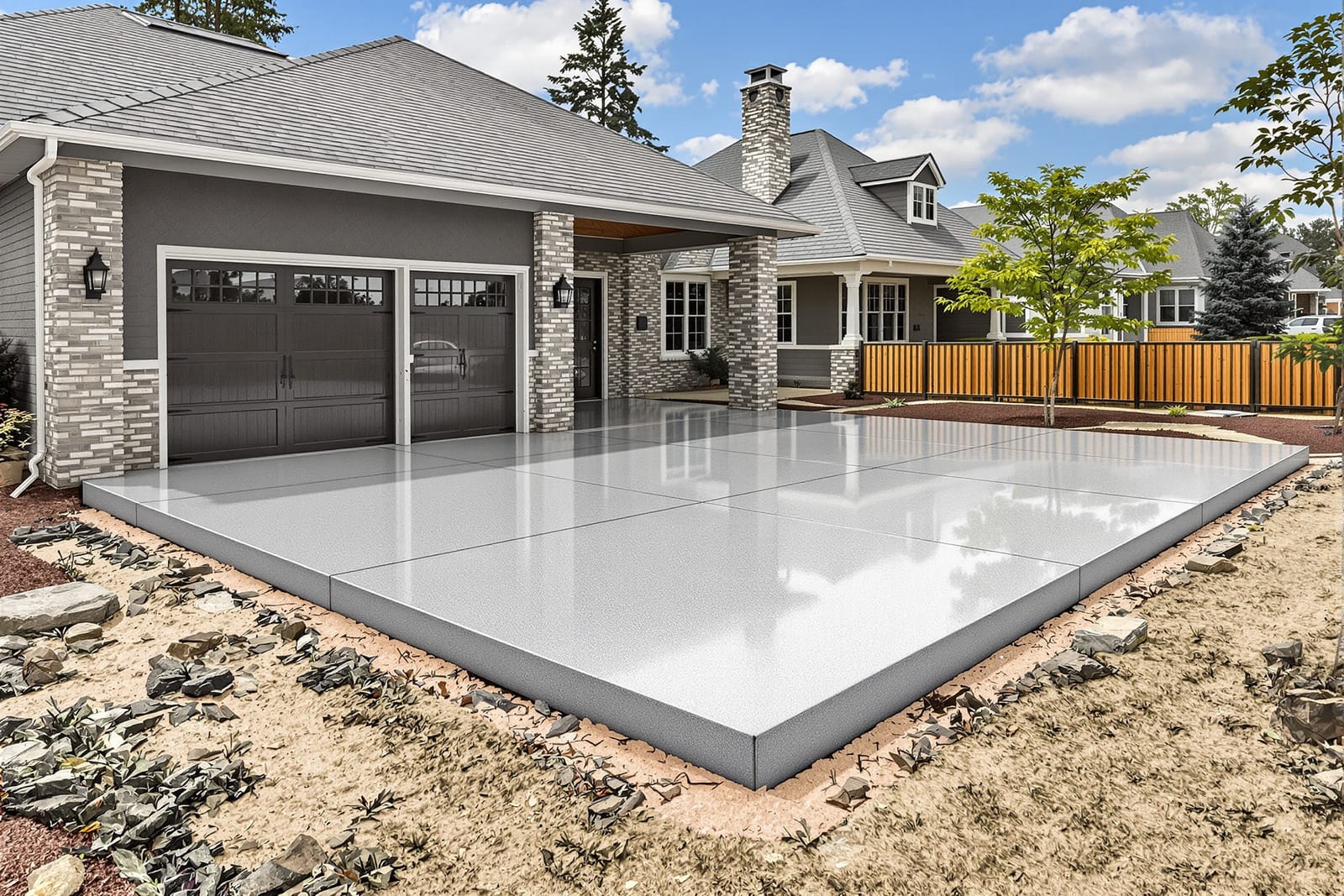
We pour commercial concrete slabs and flatwork in Fort Smith, AR for warehouses, shops, loading areas, and more. Our crew manages subgrade prep, reinforcement, and finishing to achieve durable, flat surfaces. From interior floors to exterior aprons and sidewalks, we tailor mixes and thicknesses to the loads your project requires.
Superior Concrete Fort Smith provides professional commercial concrete slab throughout Fort Smith, AR, Arkansas and the surrounding area. Our licensed, insured crew delivers safe, clean, on-time work with a free estimate before anything begins. Call 479 346 0698 or request your free quote.
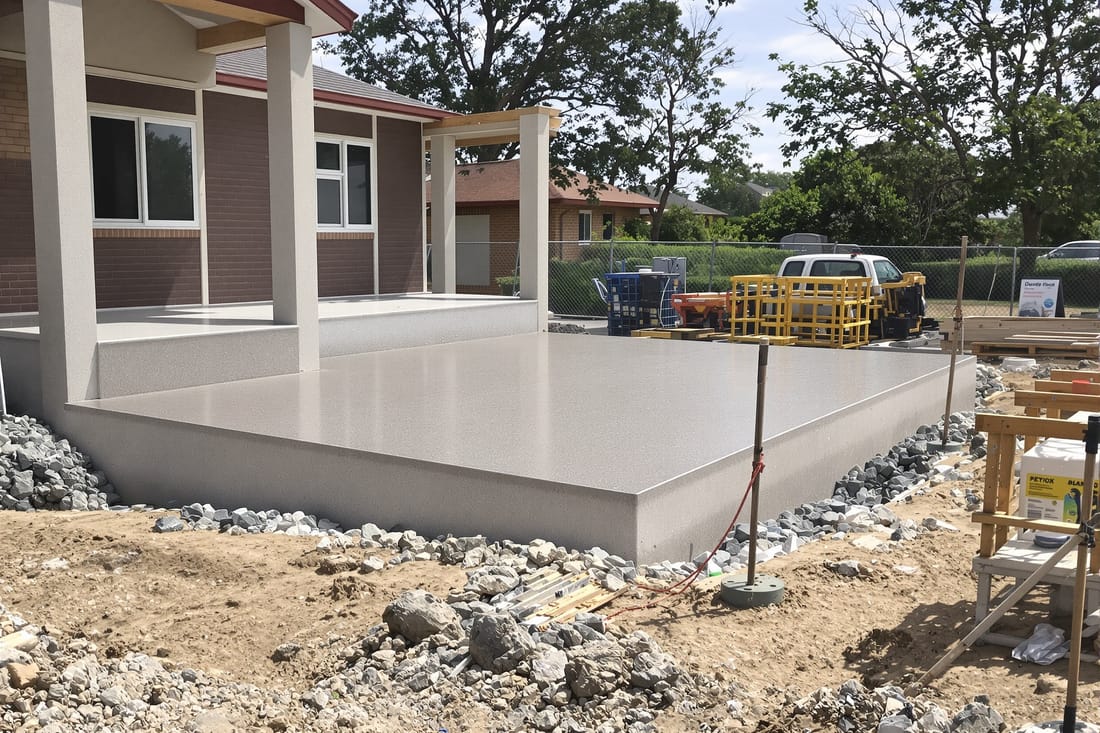
Commercial Concrete Slabs Built for Fort Smith Businesses
When your business in Fort Smith needs a commercial concrete slab, you are usually trying to solve a specific problem: support heavy equipment, handle forklift traffic, carry tall racking, or get a smooth, safe surface for customers and employees. At Superior Concrete Fort Smith, we focus on matching the slab design to the real loads and conditions on your site, not just pouring a basic pad and hoping it holds up.
Most commercial projects we handle in the Fort Smith area fall into a few categories: building foundations for metal buildings and block structures, interior slab on grade for warehouses and shops, exterior loading docks and aprons, drive lanes for trucks, and flatwork around storefronts and walkways. Each of those needs different slab thicknesses, reinforcement types, joint layouts, and finishes. We take into account your soil conditions, the type and weight of traffic, moisture issues, and the kind of equipment or shelving you plan to use before we recommend a design.
Local conditions around the Arkansas River, clay pockets, and areas that see periodic standing water can be hard on concrete if the slab is not planned correctly. We are used to dealing with those conditions in and around Fort Smith, Van Buren, Barling, and Greenwood. When Superior Concrete Fort Smith designs and installs a commercial concrete slab, our goal is to give you a surface that holds up for years with minimal patching or downtime, so you can focus on running your operation instead of chasing floor problems.
Our Process for Commercial Slabs and Flatwork
A reliable commercial concrete slab starts long before the trucks show up. Our process begins with a site visit. We walk the area with you, look at drainage patterns, existing pavement or concrete, and how trucks and people move through the property. For heavier use slabs, we often recommend a geotechnical report if one is not already available, especially for large warehouses or truck docks.
After we understand the loads and soil conditions, we design the slab thickness, reinforcement, and joint layout. For many light commercial slabs in Fort Smith, 4 to 6 inches of concrete may be enough. For heavy industrial or truck traffic, we may specify 6 to 8 inches or more. Reinforcement can be fiber-reinforced concrete, welded wire mesh, or rebar on a grid, depending on how critical crack control and load transfer are for your operation. We also plan control joints and expansion joints so any movement happens in controlled, straight lines rather than random cracks.
Site prep is usually what makes or breaks a commercial slab. Superior Concrete Fort Smith removes unsuitable soil, proof-rolls the subgrade to identify soft spots, and brings in compacted base material, typically crushed stone or gravel, to reach the proper elevation and support. We pay close attention to drainage, so water does not pool under or against the slab, which can cause settlement and freeze-thaw damage over time.
Formwork comes next. We set forms to the correct elevations and slopes, often sloping exterior slabs a small amount away from the building to move water. We install vapor barriers and insulation when required, especially under interior slabs that will receive floor coverings or where moisture-sensitive products are stored. Only after the base, forms, reinforcement, and details like conduit sleeves or floor drains are in place do we schedule the concrete pour.
How Concrete Is Placed, Finished, and Cured
For commercial concrete slabs, the concrete mix design matters. We normally specify at least 3,500 to 4,000 psi concrete for commercial flatwork in Fort Smith, and higher strengths when required by engineers or heavy loads. We often recommend air-entrained mixes for exterior slabs that see winter freeze-thaw cycles and deicing salts. For interior warehouse slabs, we may use fiber reinforcement and modified mixes that help reduce curling and shrinkage.
On pour day, we coordinate with the ready-mix supplier so trucks arrive in sequence, not all at once. Concrete is placed using chutes, buggies, or pumps, depending on site access. We strike off the concrete to the correct elevation, then screed and bull float it to bring up a paste layer and level the surface. For large slabs, we use laser-guided screeds or ride-on trowels to achieve flatter floors, which matters if you run forklifts or tall storage racks.
Timing is critical for finishing. Start too early and the surface can be weak. Wait too long and it becomes hard to work and more likely to crack. Superior Concrete Fort Smith crews monitor the weather, temperature, and wind on pour day. In hot Arkansas summers, we may add set retarders to the mix, use sun shades, or start earlier in the morning so the slab does not dry too fast. In cooler months, we may modify the mix and use blankets or temporary heat to keep curing on track.
We offer a range of finishes depending on how you use the slab. For exterior loading docks and slopes, we usually recommend a broom finish for traction. For interior slabs in warehouses or shops, a hard trowel finish or machine-troweled finish is common. If you need a specific flatness for high-bay racking or specialized equipment, we can work to those tolerances as well. Proper curing is the final critical step. We use curing compounds, wet curing, or coverings to keep moisture in the slab long enough to gain strength and reduce shrinkage cracking.
Cost Drivers, Common Problems, and How We Prevent Them
The cost of a commercial concrete slab in the Fort Smith area is driven by more than just square footage. Thickness, reinforcement, base preparation, access, and required flatness or finish all play a part. A light-use 4 inch slab with basic reinforcement and easy truck access will cost less per square foot than a thick, heavily reinforced slab in a tight downtown lot that needs pumping, complex forming, and precise tolerances.
Soil correction and base work are often the biggest surprise for owners, especially when an existing parking lot or building has been removed and soft spots are exposed. At Superior Concrete Fort Smith, we explain those risks up front and, when possible, walk the site with the general contractor or owner after demolition to confirm what we are dealing with. Bringing soft subgrade up to standard with compacted stone may add cost, but it avoids repairs, slab settlement, and trip hazards later.
Common problems with commercial slabs include random cracking, surface scaling or spalling, joint damage, and settled areas. While no concrete is completely crack free, we reduce problems by using proper joint spacing and depth, reinforcing in the right locations, and correct curing. For high-traffic joints at dock doors or where forklifts cross frequently, we often recommend doweled joints or armored joint systems to keep edges from breaking down. In areas where deicing salts are used, like exterior walks and ramps, we specify air-entrained mixes and finishing techniques that resist scaling.
If you take over an older Fort Smith building with a worn slab, we can evaluate whether repair, overlay, or partial replacement makes more sense than tearing out the entire floor. Sometimes shaving high spots, patching spalls, or adding a thin bonded overlay is enough. In other cases, especially where load demands have changed, cutting out and replacing sections with new reinforced concrete is the safer long-term fix.
What Fort Smith Customers Should Know Before Hiring
Before you hire a contractor for a commercial concrete slab, it helps to have a clear idea of how you will use the space in the next 5 to 10 years, not just on move-in day. Share details like forklift types and wheel loads, pallet rack layout, heavy machinery locations, and whether you might add more equipment or mezzanines later. Superior Concrete Fort Smith can use that information to size the slab correctly and plan reinforcement where it really counts.
Ask any contractor you talk to about their approach to subgrade preparation, joint layout, and curing. If all you hear is square foot pricing with no discussion of soil conditions or traffic types, you may not be getting a slab tailored to your business. In Fort Smith, where we see clay soils, areas of fill, and drainage challenges, cutting corners on base work or jointing shows up later as cracked or settled areas.
You should also confirm that the contractor is familiar with local codes and coordination with engineers, inspectors, and other trades. On commercial work we often coordinate slab penetrations and blockouts for plumbers, electricians, and mechanical contractors, so you do not end up cutting into a brand new slab. For new metal buildings, we work closely with your building supplier and structural engineer so anchor bolts, column pads, and thickened edge beams match the building plans.
If you want polished concrete, epoxy coatings, or specialty flooring later, the slab has to be finished and cured a certain way. Tell us up front if those are in your plans. Superior Concrete Fort Smith can adjust mix designs, finish level, and flatness so your flooring contractor is not fighting high spots, weak surfaces, or moisture problems down the line.
Finally, consider access and scheduling. Busy Fort Smith commercial corridors like Towson Avenue or Phoenix Avenue can make daytime concrete deliveries tricky. We routinely plan early morning or off peak pours and coordinate traffic control if needed so your project stays on schedule without causing unnecessary disruption to your business or neighbors.