Home › Concrete Retaining Walls
Control slopes and create usable space with a concrete retaining wall in Fort Smith, AR. We build structural and landscape retaining walls that manage soil and water effectively. From small garden tiers to taller structural walls, our concrete solutions provide strength and a clean finished appearance.
Superior Concrete Fort Smith provides professional concrete retaining wall throughout Fort Smith, AR, Arkansas and the surrounding area. Our licensed, insured crew delivers safe, clean, on-time work with a free estimate before anything begins. Call 479 346 0698 or request your free quote.
Concrete Retaining Walls Built for Fort Smith Slopes and Soils
In Fort Smith a concrete retaining wall is not just a border. It is a structure that has to hold back wet Arkansas clay, survive summer heat, and deal with sudden downpours from the Arkansas River Valley storms. Superior Concrete Fort Smith designs each wall around what your yard, driveway, or commercial lot actually needs, not around a generic plan.
We start by walking the property with you. We look at slope, existing drainage paths, soil type, tree roots, and any structures nearby. In many Fort Smith neighborhoods, like those built on older terraces or around drainage ditches, the main concern is controlling erosion without pushing water toward foundations. We measure elevations, take note of any soft or washed-out areas, and talk through what you want the space to do (support a driveway, level a backyard, create usable planting terraces, protect a parking area, and so on).
From there, we match the design and concrete mix to the job. Walls that support vehicle loads or steep grades need more reinforcing steel, deeper footings, and usually a taller, heavier section. Garden or seating walls can often be thinner and shaped for looks. Because we work only in this region, Superior Concrete Fort Smith uses mixes and details that hold up to our freeze-thaw cycles and heavy rains, not just what looks good on paper.
Types of Concrete Retaining Walls We Install
Concrete retaining walls are not one-size-fits-all. Different spots around Fort Smith call for different wall styles, and choosing the right one up front saves repairs and headaches later.
Poured-in-place reinforced concrete walls are our most common choice for steep slopes, driveways, and areas that carry heavy loads. We build forms on site, place steel rebar to match the engineer's layout, then pour a continuous wall. This style is ideal for tight spaces between houses in established neighborhoods and for commercial loading areas where you need strength and a clean face that can be coated or textured.
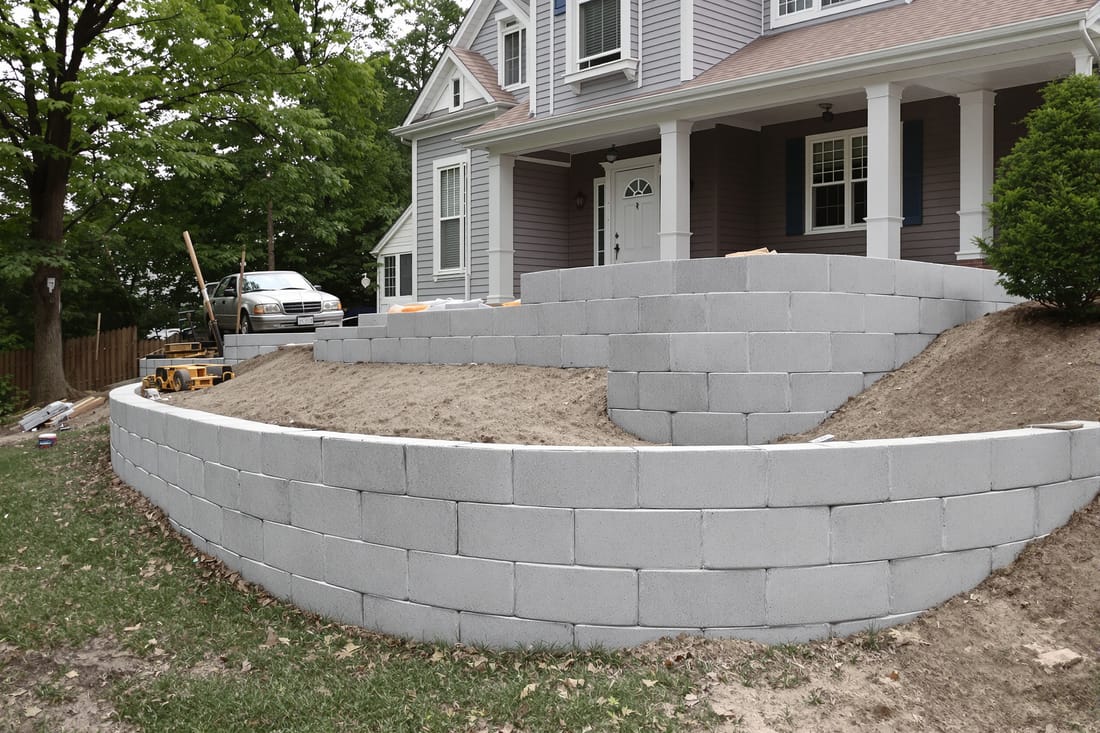
Segmental concrete block retaining walls use interlocking concrete units stacked on a compacted base. Many of these systems are engineered to lean into the soil and lock together. They are a good fit for terraced landscaping, garden beds, and medium-height slopes in backyards where you want a more decorative look or curves. In Fort Smith's clay soils, we almost always add geogrid reinforcement behind taller block walls to keep the soil from pushing the wall forward.
Shotcrete or formed concrete with stone veneer is an option if you want the strength of a structural wall with the appearance of natural rock. Superior Concrete Fort Smith can install a structural concrete wall first, then apply a stone or stamped concrete finish that fits the look of older stonework seen in parts of downtown and historic areas, while keeping modern structural performance.
How We Build a Long-Lasting Concrete Retaining Wall
A stable retaining wall comes from what you do behind and under it, not just what you see on the face. Superior Concrete Fort Smith follows a specific process on every concrete retaining wall so it works correctly in our local conditions.
We begin with excavation and subgrade prep. We dig back into the slope farther than the finished wall thickness so there is room for drainage stone and geogrid if needed. The base trench is cut to the design depth, usually to undisturbed soil. For taller or heavily loaded walls, that footing goes deeper so it sits below the frost line and reaches firmer soil.
Next comes the foundation or base. For poured concrete walls, we form and pour a footing that is wider than the wall thickness, with rebar tied in per the structural design. For block walls, we install and compact a base of crushed stone to a specified thickness, then set the first course of blocks perfectly level. A small error on the first course turns into a visible lean or step by the time the wall is complete, so we spend extra time here.
We then build the wall in lifts. With poured walls, we set forms, place horizontal and vertical rebar, and pour concrete in a way that avoids cold joints and honeycombing. With block walls, we stack courses, backfill with clean stone as we go, and install any geogrid reinforcement at the correct heights and lengths. This is where many DIY and low-cost walls fail, especially in Fort Smith clay that swells and shrinks. The geogrid ties the face of the wall into the soil mass behind it, turning the whole system into one stable structure.
Finally, we strip forms (for poured walls), finish the face, and complete the grading so water moves away from the wall, not toward it. We leave the site ready for landscaping, paving, or fencing as planned.
Drainage and Erosion Control in Fort Smith Conditions
Most retaining walls that crack or lean in our area fail because of water behind the wall, not because the concrete was weak. Fort Smith sees fast, heavy rains and a lot of plastic clay soils that hold water. Superior Concrete Fort Smith treats drainage as a structural issue, not a cosmetic extra.
Behind the wall we place a zone of free-draining aggregate, usually clean gravel, separated from the native clay with geotextile fabric. This lets water move down to the footing area instead of building pressure behind the wall. At the base we install perforated drain pipe (French drain) that carries water out to daylight or an approved discharge point away from your foundation and neighboring properties.
We also plan for surface water. If your yard or parking lot sheds water toward the wall, we may add surface drains, swales, or a concrete gutter to direct runoff before it hits the wall. On taller or multi-terrace systems, we often coordinate with gutter downspouts and existing drains so we are not dumping roof water directly behind the structure.
For properties near natural drainage channels or on steeper slopes around Fort Smith, we may recommend erosion control measures like riprap rock at the outlet of drain pipes, turf reinforcement mats on slopes, or additional low retaining tiers instead of one very tall wall. All of this detail costs less than repairing a wall that has started to tip from saturated soil.
Cost Factors and Pricing for Concrete Retaining Walls
Two retaining walls that look similar from the street can have very different costs once you understand what is holding them up. When Superior Concrete Fort Smith prices a concrete retaining wall, we look at the realities of your site rather than guessing from a per-foot number.
Key cost drivers include wall height, length, and loading. A 3 foot garden wall used for planting can often be built with simpler block systems and minimal reinforcement. A 7 foot wall near a driveway or commercial parking lot needs more excavation, thicker sections, more rebar, and often engineered plans, which all add cost but protect you from failure.
Site access in Fort Smith neighborhoods also matters. If we can bring in excavators and skid steers directly, labor and time are lower. If equipment has to be brought through narrow side yards, around fences, or in back alleys, the work takes longer and sometimes requires smaller machinery, which affects the price.
Soil conditions and drainage requirements are another major factor. Wet, unstable, or highly expansive soils need deeper bases, more stone, and more geogrid reinforcement. Walls that must tie into existing structures, like house foundations or bridge abutments, often require more engineering and careful hand work.
When we meet on site, we walk you through a line-item style explanation so you know why a particular wall design costs what it does and what is being done to protect your property. We also explain any options you have, such as choosing between a plain concrete face that can be painted later and a decorative finish installed from day one.
What Fort Smith Homeowners Should Ask Before Hiring
Before you hire any contractor to build a concrete retaining wall in Fort Smith, there are specific questions that will tell you if they understand this type of work or if they treat it like simple landscaping.
Ask how they plan to handle drainage and where the water will go. If the answer is just "we put rock behind it" with no mention of pipe, outlets, or fabric, that is a red flag. Ask what type and spacing of reinforcement they will use for your wall height and loading. Superior Concrete Fort Smith can show you sample layouts and explain them in plain language.
Find out whether they intend to use engineered drawings for taller or load-bearing walls. In many situations, especially near property lines or structures, a professionally designed wall is not only safer but can prevent problems with neighbors or future buyers. We work with local engineers who know Fort Smith soils and building practices.
You should also ask about the base and backfill materials. The answer should include compacted crushed stone under the wall and clean stone immediately behind it, not simply "dirt from the hole." Finally, ask to see recent retaining wall projects in the Fort Smith area, and look at how straight the walls are, how the grading directs water, and whether there are visible cracks or bulges.
Superior Concrete Fort Smith is built around doing this work in a straightforward, structural way instead of hiding shortcuts. When we leave, you have a concrete retaining wall that functions, drains, and fits into your property, rather than a project that slowly moves every time Arkansas weather tests it.